Recognition keeps people
Gallup and Workhuman followed nearly 3,500 employees from 2022 to 2024. Those who were well recognized were 45% less likely to have left two years later (Gallup, 2024).
22%
of employees say they get the right amount of recognition for their work
Source: Gallup, Employee Retention Depends on Getting Recognition Right (2024)
29%
of U.S. employees were recognized or praised for good work in the past seven days
9×
as likely to be engaged when recognition is done well
Source: Gallup, Employee Retention Depends on Getting Recognition Right (2024)
Yet most people aren’t getting it. Only 22% of employees say they get the right amount of recognition for their work, and fewer than three in ten U.S. employees were recognized for good work in the past week (Gallup, 2026).
Engagement peaked in 2020 and has slipped since
Share of U.S. employees engaged at work, annual average, 2000–2025.
- 2000
- 2005
- 2010
- 2015
- 36%2020
- 31%2025
See the numbers
| Year | % engaged |
|---|---|
| 2000 | 26% |
| 2001 | 30% |
| 2002 | 30% |
| 2003 | 28% |
| 2004 | 29% |
| 2005 | 26% |
| 2006 | 30% |
| 2007 | 30% |
| 2008 | 29% |
| 2009 | 28% |
| 2010 | 28% |
| 2011 | 29% |
| 2012 | 30% |
| 2013 | 30% |
| 2014 | 31% |
| 2015 | 32% |
| 2016 | 33% |
| 2017 | 33% |
| 2018 | 34% |
| 2019 | 35% |
| 2020 | 36% |
| 2021 | 34% |
| 2022 | 32% |
| 2023 | 33% |
| 2024 | 31% |
| 2025 | 31% |
Source: Gallup, U.S. Employee Engagement Declines From 2020 Peak (2026)
Personal beats generic
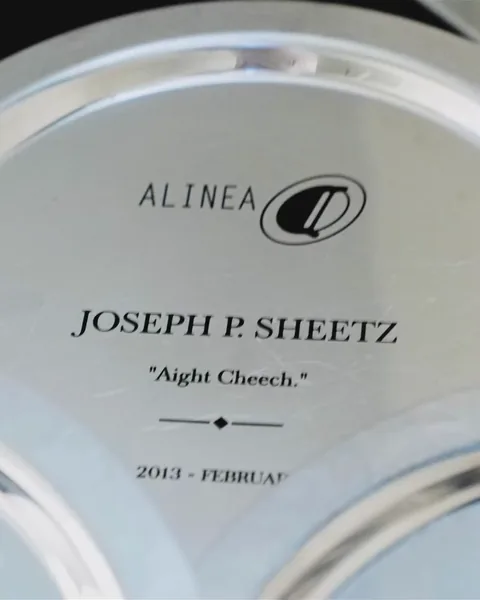
Recognition works best when it fits the person. Gallup and Workhuman name “personalized” as one of the five pillars of strategic recognition, alongside fulfilling, authentic, equitable and embedded in the culture (Gallup and Workhuman, 2024). Yet only 11% of employees say anyone at work has ever asked them how they like to be recognized.
Engagement climbs with every pillar recognition meets
Share of employees engaged at work, by how many of Gallup’s five recognition pillars their recognition fulfils, 2024.
See the numbers
| Pillars fulfilled | % engaged |
|---|---|
| None | 10% |
| One | 29% |
| Two | 57% |
| Three | 75% |
| Four or five | 90% |
Source: Gallup and Workhuman, The Human-Centered Workplace (2024)
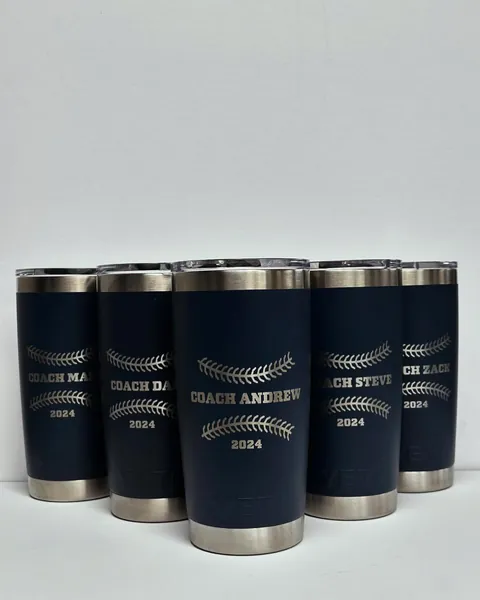
Personalization has gone mainstream. YETI has sold customized drinkware since at least 2016, and told investors in 2018 that its customized products and corporate sales were “highly popular and valued gifts” (YETI, 2018). In 2026 its chief executive named customization among the company’s investment priorities (YETI, 2026).
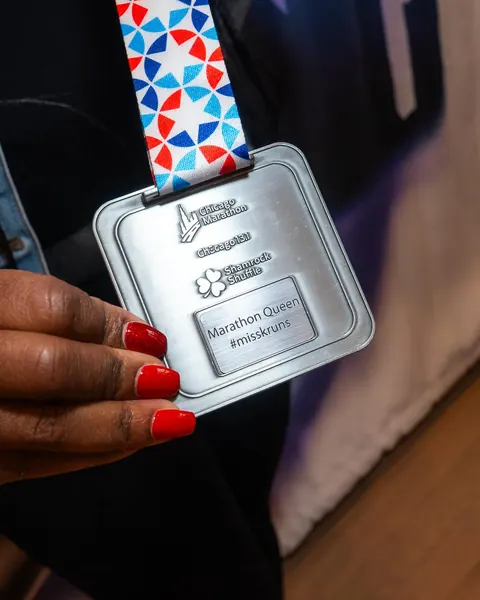
Even so, YETI’s corporate program stops at the logo: it says individual names and personalization are not available through corporate sales (YETI). The name is the part people keep. It is the part we engrave.
11%
of employees say anyone at work has ever asked how they like to be recognized
Source: Gallup and Workhuman, The Human-Centered Workplace (2024)
84%
of North American organizations include merchandise in their incentive and recognition programs
Source: Incentive Research Foundation, Industry Outlook for 2026 (2025)
A $176 billion habit
U.S. companies spend an estimated $176 billion a year on non-cash incentives, recognition, rewards and gifts (Incentive Federation, 2022). More than $40 billion of it goes to employees, and more than $27 billion to client gifts: the two kinds of work we make.
Where $176 billion goes
U.S. non-cash incentive spend by program, 2022, in billions of dollars. In brass: the two closest to our work.
See the numbers
| Program | Spend (80% recommended reporting level) |
|---|---|
| Sales incentives | $52,321,474,286 |
| Employee incentives | $40,314,491,196 |
| Customer loyalty | $31,886,027,344 |
| Client gifts | $27,466,539,900 |
| Channel and distributor | $24,173,806,765 |
Source: Incentive Federation, 2022 Incentive Marketplace Estimate (2022)
What we believe
- Recognition is a retention plan, not a nicety.
- Specific beats generic: a name, a date, the thing that was done.
- Something you can hold outlasts a message you scroll past.
- Every team, at any size, has work worth marking.
Where Chicago Award Source fits
1981
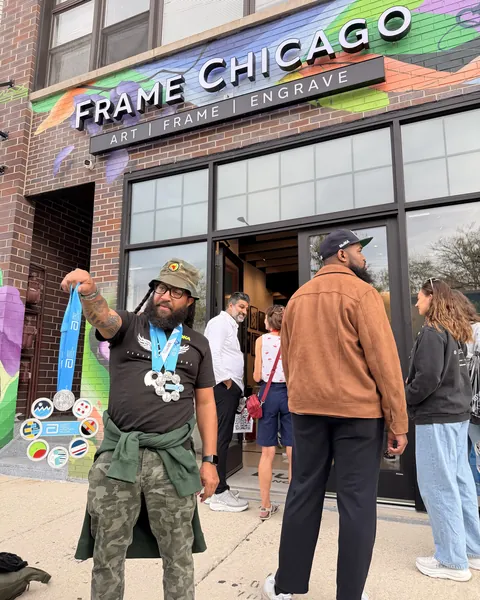
Chicago’s award maker
Awards, plaques and engraving on Clybourn for more than four decades.
Every name
Personal, at team scale
Tumblers, glassware, medals and awards engraved with each person’s name, for the whole team.
50 states
Made in Chicago, shipped anywhere
We ship awards, plaques and medals to all 50 states.
Achievement you can hold.
A thank-you fades by Friday. An award with a name on it stays on the desk, and keeps telling the team what matters.
Sources
- Gallup, “Employee Retention Depends on Getting Recognition Right” (2024; data 2022–2024)
- Gallup, “Global Indicator: Employee Engagement” (live page; reading as of May 2026)
- Gallup, “U.S. Employee Engagement Declines From 2020 Peak” (2026; data 2000–2025)
- Gallup and Workhuman, “The Human-Centered Workplace: Building Organizational Cultures That Thrive” (2024; data 2024)
- YETI Holdings, “Prospectus, Rule 424(b)(4)” (2018; data 2016–2018)
- YETI Holdings, “YETI Reports Second Quarter 2026 Results (Form 8-K, Exhibit 99.1)” (2026)
- YETI, “YETI Corporate Sales Program” (current page, read 2026)
- Incentive Research Foundation, “Industry Outlook for 2026: Merchandise, Gift Cards, and Event Gifting” (2025; data 2025)
- Incentive Federation, “2022 Incentive Marketplace Estimate Research Study (white paper)” (2022; data 2022)
Every figure was read on the page linked here. Charts start at zero, and each one has its numbers in a table.