Chicago on the world’s art stage
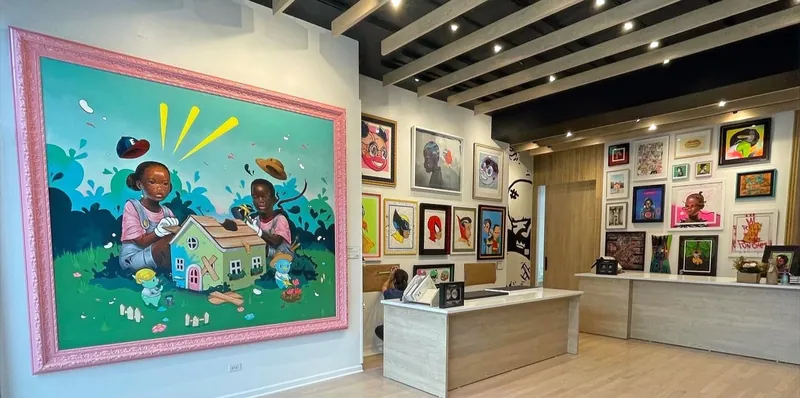
The United States is the world’s largest art market. It took 44% of global art sales by value in 2025, ahead of the UK at 18%, China at 14% and France at 8% (Art Basel and UBS, 2026). Americans bought $26.0 billion of art that year.
Where the world buys art
Share of global art sales by value, 2025.
See the numbers
| Market | Share of global sales |
|---|---|
| United States | 44% |
| United Kingdom | 18% |
| China | 14% |
| France | 8% |
Chicago holds its own on that stage. The Art Institute of Chicago welcomed 1,503,406 visitors in 2025, up 14% on the year, making it the fourth most visited art museum in the United States after the Met, the National Gallery of Art and MoMA (The Art Newspaper, 2026). In The Art Newspaper’s survey of the world’s 100 most visited art museums it ranks 48th, just behind London’s National Portrait Gallery.
Chicago beside the world’s great museums
Visitors in 2025 to the best-known art museums in Paris, London and New York, and to the Art Institute of Chicago.
See the numbers
| Museum | 2025 visitors |
|---|---|
| Louvre, Paris | 9,046,000 |
| British Museum, London | 6,440,120 |
| The Met, New York | 5,984,091 |
| Tate Modern, London | 4,514,266 |
| Musée d’Orsay, Paris | 3,785,134 |
| MoMA, New York | 2,763,720 |
| Art Institute of Chicago | 1,503,406 |
Source: The Art Newspaper, The 100 most visited art museums in 2025 (2026)
The rest of the city’s art world keeps pace. The MCA welcomed 182,126 visitors in its 2025 fiscal year (MCA Chicago, 2025), and EXPO CHICAGO drew nearly 35,000 visitors to more than 130 galleries in 2026, a fair its organizers say strengthened Chicago’s role as a key site of collecting in the United States (EXPO CHICAGO, 2026).
4th
most visited art museum in the U.S.: the Art Institute of Chicago, 2025
Source: The Art Newspaper, The 100 most visited art museums in 2025 (2026)
182,126
visitors to the MCA Chicago in its 2025 fiscal year
Source: Museum of Contemporary Art Chicago, 2025 Annual Report
Nearly 35,000
visitors to EXPO CHICAGO 2026, across more than 130 galleries
Source: EXPO CHICAGO (Frieze newsroom), 2026 end-of-fair release
A city of artists
Illinois has 106,000 artists in its workforce, the fifth-most of any state, and Cook County’s share of artists is above the national rate (NEA, 2026). Arts and culture added $37.4 billion to the state economy in 2023, more than in any other Midwest state (BEA, 2025).
Illinois has the Midwest’s largest arts economy
Value added by arts and culture in 2023, in billions of dollars. The six largest Midwest states.
See the numbers
| State | Value added (BEA, thousands of dollars) |
|---|---|
| Illinois | 37,393,781 |
| Ohio | 26,120,418 |
| Michigan | 20,546,147 |
| Minnesota | 14,802,054 |
| Missouri | 12,654,185 |
| Wisconsin | 12,439,989 |
Source: U.S. Bureau of Economic Analysis, Arts and Cultural Production Satellite Account (2025)
2.0%
of Cook County’s workforce are artists, against 1.6% nationally
Source: National Endowment for the Arts, Artists by State (2026)
$37.4 billion
added to the Illinois economy by arts and culture in 2023
Source: U.S. Bureau of Economic Analysis, Arts and Cultural Production Satellite Account (2025)
Nearly 700
works in the city’s public art collection, in over 150 city buildings
Why framing matters
Framing is preservation. Light damage to art is cumulative and permanent: dim light over a long time does as much harm as bright light over a short time, and in most cases conservation treatment cannot reverse it (Library of Congress).
The most light-sensitive colours, such as many felt-tip inks, dyed papers and colour photographs, can fade noticeably within a day to two weeks of average daylight (Canadian Conservation Institute, 2018). A frame is the first line of defence.
Framing is the last step of the work, not the packaging.
Up to 45%
of UV blocked by the same maker’s standard clear framing glass
Source: Tru Vue, Premium Clear Glass
1 day to 2 weeks
for the most light-sensitive colours to fade noticeably in average daylight
Source: Canadian Conservation Institute, Agent of Deterioration: Light (2018)
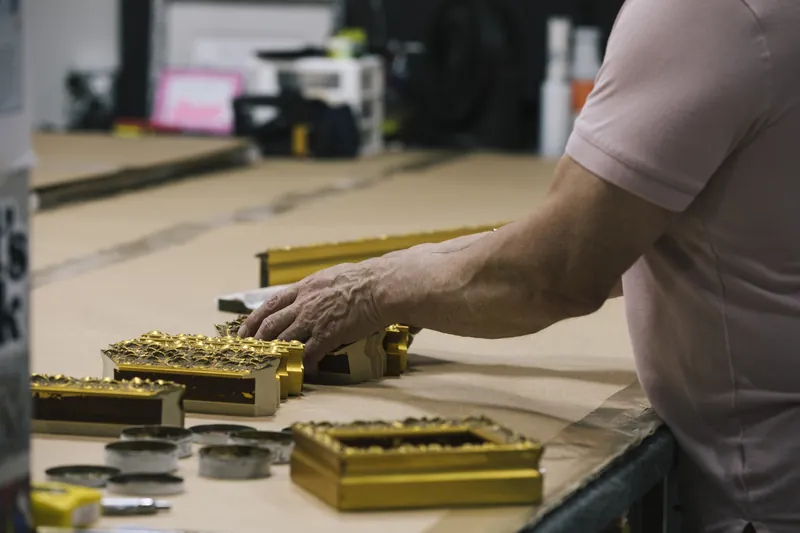
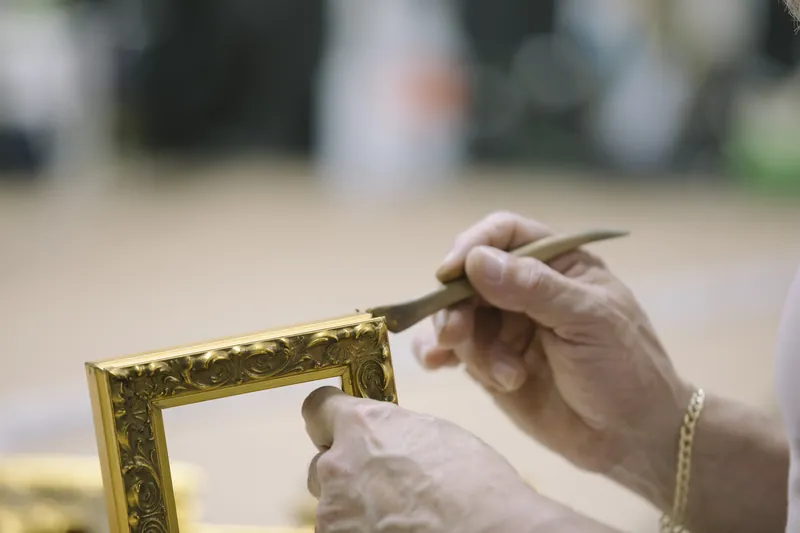
A preservation frame has a short list of parts: a 100% cotton rag or purified, lignin-free mat; UV-filtering glazing; and space so the art never touches the glass (Library of Congress). Framers’ own standards set how long each level of framing should protect a work.
How long each framing standard is built to protect
Fine Art Trade Guild framing levels, in normal conditions. Level 1 was formerly called museum framing, Level 2 conservation framing.
See the numbers
| Framing level | Built to protect for |
|---|---|
| Level 1 | At least 35 years |
| Level 2 | 20 years |
| Level 3 | Around 5 years |
Source: Fine Art Trade Guild, Level 1 framing; Fine Art Trade Guild, Level 2 framing; Fine Art Trade Guild, Level 3 framing
A wall people walk past
Art fairs still find the most new collectors, but nearly a quarter of dealers say their main source of new buyers is someone walking in off the street (Art Basel and UBS, 2025). A gallery on a busy street is not nostalgia. It is how new collectors start.
A wall people walk past still finds collectors
Share of art dealers naming each as their main source of new buyers, 2024. The three sources the report names.
See the numbers
| Main source of new buyers | Share of dealers |
|---|---|
| Art fairs | 31% |
| Walk-ins to the gallery | 23% |
| Client referrals | 16% |
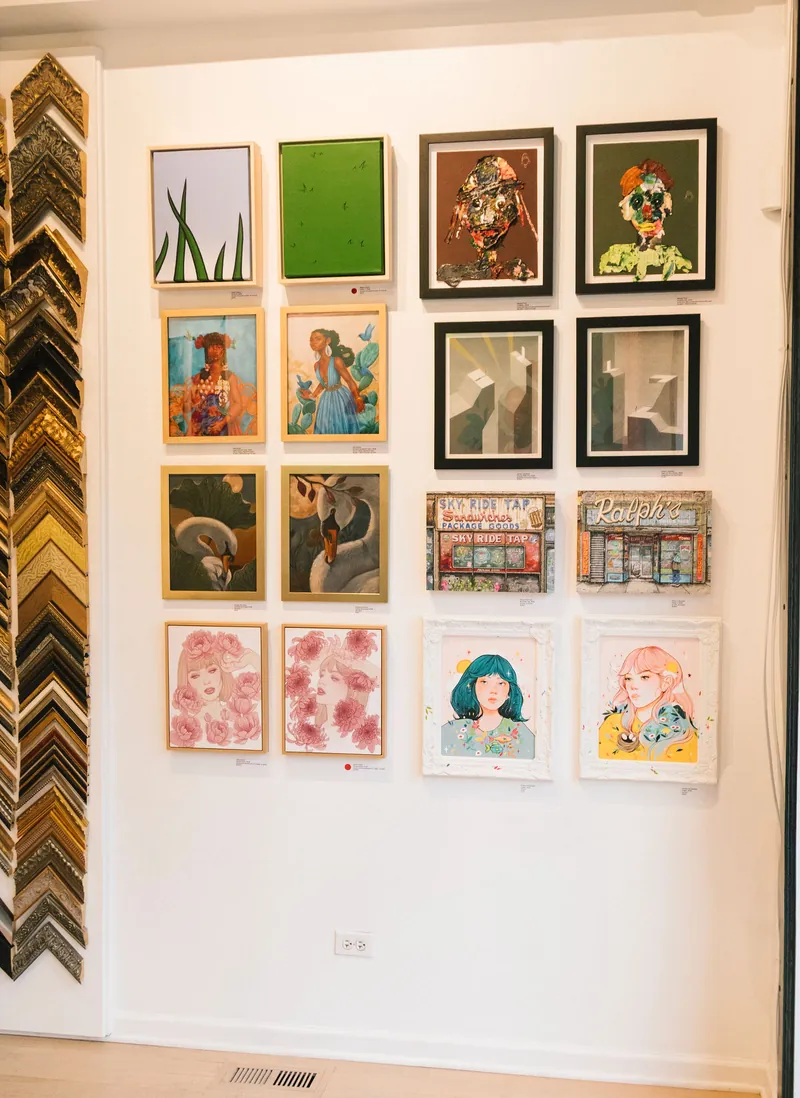
That is why our shop on Clybourn has doubled as an exhibition space since 2019. The work on our walls changes, and the people who come in to frame a piece leave having seen someone new.
What we believe
- Framing is part of the work, not the packaging.
- Chicago artists need walls people walk past, not only feeds.
- Collectors deserve museum-grade care from a shop down the street.
- The city’s art scene grows when its businesses back its artists.
Where Frame Chicago fits
Since 2019
A gallery on Clybourn
The shop doubles as an exhibition space, with a rotating wall of artists and shows such as ASCENDING with Vertical Gallery.
Table For Six
Art at the table
With Esmé, local artists and chefs made a tasting menu and a pop-up gallery, served in frames we made.
2M+
Followed piece by piece
Views on Instagram, where Chicago’s artists and collectors follow the work as it is framed.
Where Chicago’s art world comes to frame.
Chicago’s artists make the work, and its collectors keep it. We make sure it lasts, and we give it a wall where new people will see it.
Sources
- National Endowment for the Arts, “Indicator A.3: Where Are Artists and Other Cultural Workers Located in the United States?” (2026; data 2024)
- Art Basel and UBS, “The Art Basel and UBS Global Art Market Report 2026” (2026; data 2025)
- The Art Newspaper, “The world’s 100 most visited art museums in 2025: new venues a big hit with visitors” (2026; data 2025)
- Museum of Contemporary Art Chicago, “2025 Annual Report” (2025; fiscal year July 2024 to June 2025)
- EXPO CHICAGO (Frieze newsroom), “Vibrant Energy and Strong Sales Mark A New Era for EXPO CHICAGO” (2026; data 2026)
- U.S. Bureau of Economic Analysis, “Arts and Cultural Production Satellite Account, U.S. and States, 2023” (2025; data 2023)
- City of Chicago, DCASE, “Chicago Public Art Program” (undated page, current as of 2025)
- Library of Congress, “Limiting Light Damage” (undated guidance page, read 2026)
- Canadian Conservation Institute, “Agent of Deterioration: Light, Ultraviolet and Infrared” (2018)
- Tru Vue, “Museum Glass®: Anti-Reflective Conservation Glass (product page)” (current product page, read 2026)
- Tru Vue, “Premium Clear® Glass (product page)” (current product page, read 2026)
- Library of Congress, “Preservation Guidelines for Matting and Framing” (undated guidance page, read 2026)
- Fine Art Trade Guild, “Level 1 (Ultimate level) Framing” (current standards page, read 2026)
- Fine Art Trade Guild, “Level 2 (High level) Framing” (current standards page, read 2026)
- Fine Art Trade Guild, “Level 3 (Mid level) Framing” (current standards page, read 2026)
- Art Basel and UBS, “The Art Basel and UBS Global Art Market Report 2025” (2025; data 2024)
Every figure was read on the page linked here. Charts start at zero, and each one has its numbers in a table.